Types of Artificial Intelligence (AI)

Types of Artificial Intelligence (AI)

The recent buzzword in terms of technology is Artificial Intelligence (AI). In a broad sense it means that a machine or software can exhibit intelligence that almost simulates the cognitive functions of human mind, in terms of problem solving and learning. Artificial Intelligence is being implemented in different sectors of our day to day life and has impacted the current technology as well. The best examples of AI in our daily life that most people are familiar with are personal assistants on your smart phones like Google Now, Google Assistant, Siri and Cortana. Apart from these, AI has had a huge influence on things like spam filters on emails, smart categorization of emails, detection of network intruders and preventing the data breach, apps like Uber and Ola, commercial flights that use AI autopilot, among many others.

Artificial Intelligence has a vast spectrum of classification but the most prominent ones that have been influencing the rise in technology are Machine Learning (ML) and Deep Learning (DL). Machine Learning is something that applies statistical techniques that help systems to automatically learn and improve the performance of a particular task without being exclusively programmed. Machine Learning is a division of Artificial Intelligence in the field of computer science and has been particularly used in audio-visual analysis, automatic translation or transcription and driverless cars. Machine Learning is the advanced development of computer programs that can access data and learn to use it for themselves.

Deep Learning is another division of Artificial Intelligence that has networks capable of learning unadministered data that is unstructured. Deep Learning is a function that imitates the human brain in data processing and decision making with the use of patterns created over the time. Deep learning is applicable across all industries for a number of different tasks. Few examples are apps that use image recognition, open source platforms with consumer recommendation apps and medical research tools that explore the probability of reusing drugs for new diseases. It is also used for voice and image recognition algorithms by Google, Netflix and Amazon to decide what you want to watch or buy next.

Although Artificial Intelligence is gaining its pace in technology and most of the tech companies by now have come to a realization that more Machine Learning and Deep Learning experts are required in the industry, however there are only a few experts having the knowledge, education, talent and experience to work on these AI technologies. The lack of skill set and manpower is hampering the digital revolution all over the world. In order to meet this talent shortage, the tech giants all across the globe can now be observed becoming more committed to making Machine Learning and Deep Learning accessible to students and developers by offering programs and courses in AI.

Artificial Intelligence can transform the way we work, interact and communicate and for this to happen there’s a need to put the right tools in the right hands. A renowned business school that provides a top notch 3-day course in Artificial Intelligence to working professionals, leaders, entrepreneurs and business owners is WeSchool, Bangalore – the best business school in India, where you’ll get an opportunity to learn about Artificial Intelligence, Machine Learning, Deep learning and much more. To know more about the course details, please log on to the WeSchool website https://welingkarexedp.com/

Importance of AI in the corporate world

Importance of AI in the corporate world

When it comes to technology and computer science, Artificial Intelligence or AI is the most talked about jargon in the recent times. AI generally is a notion that refers to machines or software that can stimulate cognitive functions similar to the human mind. AI can have intelligence which almost mimics humans in terms of learning, problem solving and carrying out tasks in a way that humans do. AI is designed to make real-time decisions unlike passive machines that are only capable of mechanical and fixed responses. AI has distinctive algorithms that give them the ability to learn and adapt as they make decisions. The most prominent types of Artificial Intelligence that has transformed and impacted technology are Machine Learning (ML) and Deep Learning (DL). Machine Learning is a division of Artificial Intelligence in the field of computer science. Deep Learning is a function that imitates the human brain in data processing and decision making with the use of patterns created over the time.

Artificial Intelligence, however, is not a replacement for human knowledge and originality. AI is rather a supporting tool for the humans that will help us to work efficiently. Since AI is proficient at processing and analyzing data far more quickly than a human brain could, we can use AI to help understand possible consequences of each action and make the decision-making process smooth-running. Especially for manufacturing industries, robotic technology has been responsible for altering simple yet time-consuming processes and being replaced for tasks such as mining activities, welding and movement of parts within a factory. As organizations become more productive, time and money can be invested in engaging with the workforce, which means that a better worker experience can be created for better customer experience.

Machine Learning and Deep Learning has been implemented by a number of apps and corporations. Whether it is Apple’s digital assistant Siri, Google’s digital assistant Google Now or Cortana in Windows Mobile, AI has been transformational to the extent that it almost seems to replicate human characteristics, intellect and behavior. However, it is only recently that companies have been able to predict and visualize the possibilities that AI and robotics can bring to the business world in the future. A known example is Facebook, which uses facial recognition software that asks people to label their photos to improve accuracy. ICICI Bank also has been experimenting with AI, through which their email bot sorts out customer and distributor emails based on the status of transaction. A company like Enlitic is a pioneer in Medical Deep Learning.  Enlitic is one of several Deep-Learning startups that use AI to scan medical images to help diagnose cancer. Another innovative company is Affectiva, an emotion measurement technology company that grew out of MIT’s Media Lab. Affectiva uses them to recognize emotions such as joy, surprise and anger in focus groups. Other sectors that use AI are self-driving cars, stock exchanges, cyber security, video games, national defense and ride-sharing companies like Ola and Uber.

The advancement of technology and the realization of the significance of AI has made organizations implement it in their hiring process as well. Organizations all over the world are now hiring their employees who specialize in Artificial Intelligence, Machine Learning, Deep Learning, among many other such subjects. Tech companies are investing in AI financially in terms of educating and training their employees to become specialists in these subjects. As there is a dire requirement to fill the gap with people who are experts in Artificial Intelligence, Machine Learning and Deep Learning, people are now choosing courses and programs that can train them for learning this technology.

Artificial Intelligence is quickly gaining its pace in technology and is affecting our lifestyle, work and business, therefore making it imperative to have knowledge in these skills. One of the renowned business schools in Bangalore is WeSchool (Welingkar Education) that provides a top notch 3-day course in Artificial Intelligence to working professionals, leaders, entrepreneurs and business owners. WeSchool, Bangalore is the best Business School in India the gives an opportunity to learn about Artificial Intelligence, Machine Learning, Deep learning and much more. To know more about the course details, please log on to the WeSchool website https://welingkarexedp.com

The importance of Business Analytics

The importance of Business Analytics

Business Analytics is a discipline wherein unstructured business data is assimilated and organized before being precisely analyzed through a wide variety of statistical methods. Business analytics combines the study of information sciences and statistics to ensure that business decisions are made through a data driven approach. Today, organizations consider data as a prized asset and leverage the power of data and insights obtained from the data to their competitive advantage. While, the data used for analysis can be derived from a wide variety of sources, the challenge is to ensure how the data is used to formulate strategies for business success.

To understand the importance of the business analytics, it is also important to understand the scope of business analytics in terms its applications and usage. Business analytics as a discipline can be used to arrive at an analysis which may either one of the three viz. descriptive analysis, predictive analysis and prescriptive analysis. A descriptive analysis can help a company assess its market position which has resulted in decision made and implemented in the past. Thus, a descriptive analysis provides an insight into the past and present situation of a company. A predictive analysis helps a company assess past data and to draw a pattern which helps to identify risks and opportunities using the relationship of the data and various parameters. A prescriptive or decision analysis provides a data driven decision which also includes the possible outcome of the decision being taken.

With the understanding that business analytics helps decision makers in an organization to make an informed decision, the following points are the reasons why business analytics as a discipline is gaining so much importance.

  1. Cost Consciousness:

Insights received from business analytics related statistical analytics can provide a good overview of the financial position of the organization in terms of base working capital, cash flows and the like. While the concept of fail fast, fail cheap is well known, business analytics can quantify for an organization the definition of fast and cheap.

  1. Efficient decision making:

The data driven decision making ability provided by business analytics enables an organization to make decisions rationally and swiftly. Critical business operations of an organization can be monitored using the factual insights, thereby ensuring strategic and timely decision making.

  1. Customer Centricity:

Business Analytics insights allow organizations to use customer analytics to identify target customers, quantify customer acquisition cost and customer conversion costs, customer likes and dislikes, and many such customer driven parameters. This allow organizations to drive decision relating to providing hyper personalized products based on customer preferences.

  1. Competition Insights:

There is a high possibility that a highly personalized product may fail if an organization has ignored insights on the competition in the market. The data driven approach of business analytics helps organizations to identify and categorize competitors based on their strengths and weakness and further define risks and opportunities.

In today’s age of the digital and data driven economy, the importance of Business Analytics cannot be stressed enough. Business Analytics as a discipline is driving change in a large number of organization around the globe and changing decision making in an organization with a view on the inside as well as on the outside.

Weschool, Bangalore (Welingkar Insittute of Management) conducts a highly popular program on Business Analytics. To know about the details of the Business Analytics courses at Weschool – the best PGDM Institute in India, you can visit the website.

How Does AI Work?

How Does AI Work for Management Education

The application of Artificial Intelligence in education has never been stronger ever. Entering the management learning is AI’s dynamic possibilities. However, how does this work when it comes to the field of management education?

Popularly called Welingkar Bangalore, or Welingkar Institute of Management Development and Research, AI is not a technology, but a powerful learning partner at Welingkar Bangalore. In this blog, we will look into how AI courses in Bangalore is helping students prepare for the future as leaders.

The Rise of AI in Management and Education

From big data analytics, robotics, and automation, AI has come a long way and altered business processes to the maximum. Today, managers must be able to lead as they understand AI and predictive analytics-driven decision making, and as they do the traditional ones.

Welingkar Bangalore has taken to this shift and made sure to educate till the modern management education does not just teach about business strategy but prepares the students to live in a world where AI is a part of things. It is woven into the academic fabric, whether you are accessing through the corpus of the Welingkar student portal or our specialized workshops.

How Does AI Work?

How does AI work? It is simple to understand. In AI systems, they are designed to mimic human intelligence. They learn from experience and make predictions or decisions with no constant human intervention as they analyze huge volumes of data and identify patterns.

For instance, AI powered education platforms can work on tracking students’ performance in the past and then determining an individualized study plan. This can suggest resources that a student requires a bit more support in, so you can provide a much more individualized path to getting to the destination. This is especially relevant for students who are taking AI courses in Bangalore or are participating in a management program at WeSchool.

  • Personalized Learning
    The most exciting aspect of how AI transforms education is the learning style in which you cater to each person, the teacher. All students are different in their learning style, their drag, and their attention span. The AI tools can review their interaction with the learning materials and suggest proper content, assignments, and revision exercises that they need.

This is especially powerful for executive students who are working and want to study at Welingkar Bangalore. In our programs, AI-based platforms are used to customize the study material, highlight the weak areas, and facilitate higher learning retention.

Irrespective of whether you are interested in our business strategy, HR, or any of our AI courses in Bangalore, the common objective is to make learning as relevant and impactful as possible.

  • AI-Powered Course Delivery and Assessment
    AI is delivering the courses more efficiently. For example, in Bangalore, simulation-based learning and virtual AI assistants help in interacting with the real problems of business by creating similar scenarios.

With AI, one can automate routine assessments and gain more time for mentoring and discussion. A special part of AI is Natural Language Processing (NLP) methods that can analyze written submissions or discussion forums and provide feedback fast.

Students at Welingkar Institute of Management Development and Research can gain instant insights into their performance to develop at a rapid pace in their academic journey.

  • Smart Mentoring and Virtual Coaching
    Teaching isn’t enough for modern AI systems; they are meant to mentor. Chatbots and AI tutors are staying with you to cover the gaps between hours spent in the classroom. These tools are available 24/7 and answer questions, guide through concepts, help them understand concepts, or even provide study plans based on a student’s progress.

For instance, if a student fails to attend an HR Analytics demo at Welingkar Bangalore, an example from AI can help them get a bite-sized video recap of what they missed or let them try a quiz to review, thereby helping them absorb and remember what they missed.

  • Data-Driven Academic Decisions
    Any useful management education is about informed decision-making. Only faster, in other words, is what AI does. Today’s universities use AI analytics to keep track of their students’ attendance levels, academic scores, emotional well-being indicators, and peer interaction trends in order to measure student engagement.

All these data points are integrated to make students better prepared, be it in recommending an assignment to a leadership module, an industry project, or mentoring a certain faculty.

  • Bridging the Industry Expectation and Academic Skills
    Since businesses are rapidly adopting AI, the skills that management graduates will need are changing. They are searching for people who not only know business strategy but who can run data, automate, and intelligent systems.

That is why AI training in Bangalore is becoming popular, for people who aren’t just techies but budding managers and decision makers. Our School program depends on conceptual learning alongside experiences in practical exposure in order to prepare them for AI-driven workplaces.

Real-World Applications of AI in Business Education

Some real use cases of our students that we’d like to look at one by one:

  • Predictive Analytics Tools – used in finance and marketing modules to teach how businesses forecast trends
  • ChatGPT-style Writing Assistants – used to develop business communication skills
  • Facial Recognition Attendance Systems – enhancing campus operations
  • AI-powered CRM Simulations – part of marketing electives, where students strategize using AI-integrated tools

This hands-on exposure is ensured so that students of Welingkar Bangalore are not only aware of AI but are also fluent in it.

Encouraging Responsible AI Use

At WeSchool, we don’t say just to use AI, but rather focus on the responsible use of AI. Our management curriculum includes such things as ethics, data privacy, and human oversight. Our students are taught to know where AI shines and where human instinct matters more: with a case study or a corporate project.

The Future is AI-Driven. So is Education.

At the beginning of the next decade, AI courses in Bangalore will be the core of management education’s transformation. Intelligent systems are not something to try; it is mandatory to adapt, learn, and lead.

Welingkar Institute of Management Development and Research is always growing ahead. It is preparing students for the now, but more importantly, for the future by embedding AI in our learning, methodology, pedagogy, and administrative processes.

Ready to learn smarter? Learn how AI can supercharge your career today and explore our executive programs.

FAQs

Q1. How does AI work to enhance student learning?

AI tracks student behaviour, discovers learning patterns, and suggests personalised study materials. AI tools are used to automate assessments and provide interactive, simulation-based learning experiences in institutions like Welingkar Bangalore.

Q2. What are the benefits of AI in management education?

AI provides management education with personalized learning, real-time performance feedback, smart mentoring, and predictive analytics.

Q3. Can beginners easily understand how AI works?

Absolutely. If you’re asking yourself how AI works for beginners, this means that AI is a way in which machines learn from data and predict or automate things. AI training in Bangalore provides beginner-friendly AI modules, which are usually a part of AI training offered by leading institutes such as Welingkar Institute of Management Development and Research.

Also read, Marketing skills every Marketer need

Common ChatGPT Interview Questions and How to Prepare

Common ChatGPT Interview Questions and How to Prepare

With the rise of generative AI tools like ChatGPT, we’re seeing a major shift in how professionals are evaluated; not just on technical knowledge, but also on their grasp of real-world AI applications. Many top companies are now including ChatGPT-related questions in interviews to test how well candidates use advanced tools to solve problems creatively and efficiently.

This guide is designed to help you prepare if you’re pursuing AI training in Bangalore or planning your career in marketing or business strategy. Let’s walk through how you can confidently tackle ChatGPT-related interview questions.

Why Are Employers Asking About ChatGPT?

Artificial intelligence is no longer just a buzzword—it’s integrated into everything we do at work. From automated HR systems to content planning and data management, tools like ChatGPT enhance productivity and creativity across departments.

So when you’re asked about ChatGPT in an interview, what they’re really looking for is your ability to understand and apply AI tools in practical business situations, whether it’s customer service, communication, or process automation.

Top ChatGPT Interview Questions You Might Face

Chat GPT-related questions frequently asked during interviews, especially in marketing, management, and HR roles, are as follows:

What is ChatGPT, and how does it work?

This is a foundational question. Interviewers want to see if you understand the basics. You can explain that ChatGPT is a large language model created by OpenAI, based on deep learning algorithms. It uses the GPT architecture and is fine-tuned with something called Reinforcement Learning from Human Feedback (RLHF).

If you come from a business background, make sure to connect ChatGPT’s functionality to real-life applications like automation or communication enhancement.

How can ChatGPT be used in digital marketing or management roles?

This is where your knowledge of the skills required for marketing really counts. You can show your understanding by talking about how ChatGPT can help with:

  • Creating ad copy variations
  • Conducting competitor research
  • Generating email subject lines
  • Drafting social media captions
  • Automating customer queries

You can also mention how it helps analyze dashboards and simplifies complex data, skills that are highly valued in today’s business environment.

What are the limitations of ChatGPT in business environments?

This is a question where many candidates go wrong by only praising AI. However, employers are looking to see if you understand both the strengths and the limitations.

Good points to mention include:

  • ChatGPT doesn’t have real-time data access (there’s a cutoff)
  • It can sometimes generate inaccurate or biased content
  • It can’t replace human creativity or decision-making

These insights show you’re a responsible AI user, something that’s highly appreciated in structured programs like those at We School Bangalore.

Have you used ChatGPT in any academic or practical project?

This is your chance to share real-world experience. Even if you’re a student, you can talk about how you’ve used ChatGPT to:

  • Brainstorm content ideas
  • Simulate mock interviews
  • Develop campaign strategies

These are great examples to bring up—especially if you’re studying at places like Welingkar Institute of Management Bangalore, where practical exposure is highly encouraged.

How do you fact-check content generated by ChatGPT?

Since ChatGPT isn’t always 100% accurate, employers want to know how you verify its output.

You can respond with something like:

  • “I always cross-check important facts with reliable sources like Google Scholar or trusted websites.”
  • “For content tone and structure, I use Grammarly for plagiarism tools.”
  • “When needed, I consult domain experts.”

This shows that you don’t rely blindly on AI, and you know how to ensure content quality.

How can ChatGPT assist in customer service automation?

ChatGPT can be a game-changer in automating support. You can explain that it helps power chatbots, answer FAQs, route complex queries to human agents, and reduce wait times. This improves customer satisfaction significantly.

If you’re in marketing or product-based industries, show how you could deploy it to gather feedback, handle inquiries, or even guide customers to upsell flows.

What are some ethical considerations when using ChatGPT in business?

Ethical awareness is critical. You want to highlight that you understand the importance of responsible AI usage.

Here are a few key issues:

  • Risk of misinformation
  • Language bias
  • Over-dependence on AI
  • Data privacy breaches

It’s essential to stress validating outputs, avoiding sensitive data input, and staying transparent about AI use. That kind of awareness shows maturity.

How to Prepare for ChatGPT-Related Questions?

You don’t need to be a coder to ace these questions. Let’s talk about how you can prepare in a smart and hands-on way.

Build Familiarity With the Tool

Use ChatGPT regularly. Ask it to generate ideas, write a LinkedIn summary, or create a content strategy. The more you use it, the more confident you’ll become in interviews.

Study Real-World Use Cases

Understand how ChatGPT is being used across departments—sales, HR, customer service, and more. This kind of cross-functional knowledge makes your responses far more valuable.

Stay Updated on AI Trends

Subscribe to AI newsletters, blogs, or YouTube channels. If you’re undergoing AI training in Bangalore, use that as an opportunity to stay on the cutting edge.

Develop Soft Skills

While AI can automate tasks, it can’t replace human creativity and storytelling. Focus on building:

  • Communication
  • Business storytelling
  • Critical thinking

These are some of the most essential skills required for marketing and modern business success.

How Welingkar School Bridges This Learning Gap?

At the Welingkar Institute of Management Development and Research, we go beyond theory. Students don’t just learn about AI tools like ChatGPT—they actively use them in marketing, HR, and business strategy simulations.

Workshops, case studies, and live projects make sure you’re prepared to walk into your job interviews AI-ready and confident.

Conclusion

So, you’re preparing for your next interview—and you’re doing great already. If you’re learning about ChatGPT and how to use it, you’re ahead of the curve. Tools like this are changing the way we work, and knowing how to talk about them gives you a big edge.

But here’s something to think about: if you’re serious about this path and want to build real skills, not just answers…Then why not join a good AI training course in Bangalore?

Welingkar Institute of Management Bangalore, is already on the track to build future-ready education by blending core management principles with applied AI literacy.

FAQs


ChatGPT questions commonly center on how the tool can aid ad writing, customer analysis, and automation in marketing campaigns.

HR professionals use ChatGPT for screening, drafting policies, internal communication, and much more. Managers use it to plan, report, and collaborate with their team.

ChatGPT can be used to work with it in real academic or practical tasks, keep updated on the current AI trends, and get accustomed to its limitations to respond properly.

Marketing skills every Marketer need

Marketing skills every Marketer need

Do you want to become an efficient Marketer? Curious to know what takes to become one?
If yes, you are definitely going to benefit through this piece of information.

We live in a fast-paced world. The world is changing at the speed of light.
And so is the world of Marketing. It is evolving at a high speed. So how do we ensure that we are picking
up the pace? Well, the easiest way is to work towards building the foundation right and that is exactly
where, the role of emerging skills comes into play.

Let’s get into the depth of the skills one needs to master to become a successful Marketing professional:
All you require is an understanding of MARKET. You must be wondering, what is new in that? Well,
When I say market – not just the market in which one is operating but:

1. Master Storytelling
2. Analytics
3. Research
4. Knowledge about Customers
5. Enthusiam
6. Time Management

1. Master Storytelling:
As per a study done by LinkedIn – It was found that close to 8% of all Marketers on the platform have
Storytelling listed as skill on their profile.
We all have grown up listening to stories from our grandmother. Even with those sleepy eyes, we could
not stop ourselves from asking our granny – what next, and then? Well, this is the power of storytelling;
it has the ability to bind the audience in an impactful way. This is exactly what a Marketer can do.
A Marketer must have the ability to use data in a way wherein the data is no longer just plain numbers
but actually carved into genuine stories which make sense and contribute to the value proposition of the
brand. This is can be done via online content creation, book marketing, etc. After all, the idea is to make
the content relatable and emotionally compelling.

2. Analytics:
Data Analysis is a critical Marketing skill in the age of Marketing Automation.
It is important to ask the right questions as only right questions can yield right responses i.e. data, which
is objective in nature and could potentially be utilized to derive insights, which would support business
decisions.
Not just data capturing but also data visualization has an equally important role i.e. the ability to
represent the data in a crisp and comprehendible manner. Tools like Power BI, Tableau can be used to
display data in the form of concise charts, diagrams, etc.

3. Research:
A huge part of marketing is research.
The ability to research, strategize and effectively plan campaigns is a Marketing skill one needs in order
to achieve goals.

4. Knowledge about Customers:
It is imperative to understand what a customer wants and the emotional value that a customer
associates with the product/service. Once these basics are in place, the details wr.t. which platform
needs to be used to market, what content helps increase the outreach can be accordingly thought
through. Some basic questions that a Marketer must ask for better understanding of the customer:
A. What are my target audience’s value?
B. What is the background of my target audience?
C. What problem is my product/service trying to solve?

5. Enthusiasm:
The Marketer must be enthusiast about the product/service he is advocating for. If he/she himself does
not possess the skill to demonstrate enthusiasm about the same, the customer would never be
delighted or display an interest for it.

6. Time Management:
The role of a Marketer is diverse and gets to wear multiple hats but at the same time, demands a lot of
multitasking. To put in simple terms, he/she needs to juggle several balls in the air and none can be
dropped. Hence, Time Management as a skill plays an extremely vital role. The ability to manage hectic
schedules be systematic when it comes keeping a record of tasks and ensuring that tight deadlines are
met.

To build these skills is no rocket science; simple daily habits can lead to enrichment. Self-learning through
reading readily available books on Marketing, joining online knowledge sharing groups and pursuing
certifications could be some of the starting points.

Welingkar Institute of Management Development & Research popularly known as Weschool, offers the Best Executive Education Programmes in Bangalore, India. Enroll Now!

Career Spotlight: AI Research Scientist

10 Essential Skills for AI Research Scientist Careers

Introduction

The world of technology is evolving at an unprecedented pace, and at the absolute forefront of this revolution are the brilliant minds pushing the boundaries of machine intelligence. Entering the field of artificial intelligence is no longer just a futuristic dream—it is a tangible, rapidly expanding, and highly rewarding professional path. Among the various roles in the tech ecosystem, the role of an AI Research Scientist stands out as the ultimate pinnacle of innovation and discovery.

As we look toward 2026, Ai careers are booming exponentially. Organizations globally are investing billions into generative AI, autonomous systems, natural language processing, and advanced robotics. Yet, despite this massive financial influx, there is a severe global talent gap. Companies are desperately seeking visionaries who can not only utilize existing machine learning models but also architect entirely new neural frameworks from scratch. If you have ever wondered what it takes to become the mastermind behind the next breakthrough language model or self-driving algorithm, this comprehensive guide will detail everything you need to know.

From mastering the core skills for AI to navigating the complex landscape of higher education and practical experience, this article explores the complete roadmap. We will uncover the specific programming languages you need, the reality of the AI research scientist salary, and whether pursuing a PhD in AI is truly necessary to succeed in today’s competitive landscape.

What Is an AI Research Scientist? 2026 Career Guide

Before diving into the technical skills and educational pathways, it is crucial to understand what the job actually entails. What exactly does an AI Research Scientist do on a daily basis?

Unlike a standard software developer or a data analyst, an Artificial intelligence scientist operates at the bleeding edge of theoretical and applied computer science. Their primary objective is not just to build functional software, but to expand the cognitive capabilities of machines. They ask complex questions that have never been answered and design advanced algorithms that can learn, adapt, and reason in ways that mimic—or even surpass—human intelligence.

Becoming an AI Research Scientist: Skills, Education, and Jobs

Transitioning from a computer science student or a traditional software engineer to an AI Research Scientist requires a deliberate and highly structured approach. It is not a role you can simply pivot into by taking a quick weekend bootcamp; it requires deep, sustained study and relentless practical application.

The journey to Becoming an AI Research Scientist: Skills, Education, and Jobs involves mastering a complex stack of theoretical knowledge and practical engineering techniques. You must intimately understand the underlying calculus of how a neural network learns, while simultaneously possessing the coding prowess to implement that math efficiently across clusters of cloud GPUs. Furthermore, you must learn to leverage modern AI tools for research to accelerate your experiments and validate your findings.

Let’s break down the essential competencies required to excel in this highly competitive, high-reward field.

10 Essential Skills for AI Research Scientist Careers

To thrive as an AI Research Scientist in 2026, you must cultivate a versatile, deep, and constantly updating skill set. Here are the 10 essential skills for AI research careers:

1. Deep Learning and Machine Learning Algorithms

At the very core of an AI scientist‘s repertoire is a profound understanding of machine learning algorithms. This goes far beyond simply calling a library function in Python; it involves understanding the raw mathematics behind gradient descent, backpropagation, and loss functions. You must be intimately familiar with architectures like Transformers, Convolutional Neural Networks (CNNs), Recurrent Neural Networks (RNNs), and Generative Adversarial Networks (GANs).

2. Advanced Mathematics and Statistics

Artificial intelligence is, fundamentally, applied mathematics. A successful AI Research Scientist must have a rock-solid foundation in linear algebra (vectors, matrices, tensor operations), calculus (derivatives, partial differential equations), and probability and statistics. This mathematical fluency is what allows a researcher to understand exactly why an algorithm fails and how to invent a new one to solve the problem.

3. Proficiency in Programming Languages

While theoretical knowledge is crucial, you must be able to translate complex equations into executable code. Python is the undisputed king of AI research due to its readability and massive ecosystem of data libraries. However, a top-tier Artificial intelligence scientist should also be highly comfortable with C++ or Java for performance-critical applications, real-time systems, and efficient model deployment.

4. Mastery of AI Tools and Frameworks

You cannot conduct modern research from scratch. You must master the industry-standard AI tools for research. Deep, hands-on expertise in frameworks like PyTorch and TensorFlow is absolutely mandatory. Additionally, familiarity with libraries like Hugging Face, Keras, Scikit-learn, and JAX is increasingly expected in cutting-edge research labs.

5. Natural Language Processing (NLP) and Computer Vision

Depending on your specific research specialization, you will need deep domain expertise. If you focus on NLP, you must understand tokenization, word embeddings, sequence-to-sequence models, and attention mechanisms. If you focus on Computer Vision, you must master image segmentation, object detection algorithms (like YOLO), and multimodal models that combine text and visual inputs.

6. Data Engineering and Big Data Processing

An AI Research Scientist is only as good as the data they train their models on. You must know how to clean, preprocess, and manipulate massive, messy datasets. Skills in SQL, Pandas, NumPy, and big data technologies like Apache Spark, Hadoop, or Snowflake are essential for managing the fuel that powers your intelligent models.

7. Scientific Research and Academic Writing

Unlike standard software engineers, researchers must communicate their novel findings to the global scientific community. You must know how to conduct exhaustive literature reviews, design rigorous and reproducible experiments, and write compelling, peer-reviewed academic papers.

8. MLOps and Model Optimization

In 2026, research does not live purely in the academic lab. You must understand how to optimize heavy research models for scale, speed, and enterprise deployment. Knowledge of MLOps, containerization (Docker, Kubernetes), and cloud AI platforms (AWS SageMaker, GCP Vertex AI, Azure Machine Learning) helps ensure your research can eventually be deployed in the real world.

9. AI Ethics, Governance, and Explainability

As AI systems become exponentially more powerful, ethical considerations are paramount. The ai scientist must understand bias mitigation, model explainability (XAI), and global data privacy laws. Building fair, transparent, and safe AI systems that do not perpetuate societal biases is a core ethical responsibility of the modern researcher.

10. Critical Thinking and Problem-Solving

Finally, the most important intrinsic trait is the ability to tackle unsolved problems. Research is inherently frustrating; the vast majority of experiments will fail. An AI Research Scientist must possess the intellectual resilience to debug complex logic, pivot rapidly when hypotheses are disproven, and continuously innovate through trial and error.

AI Research Scientist Salary

Because the role demands such a rare, highly specialized, and mathematically rigorous skill set, the compensation is exceptionally lucrative. As companies fiercely compete for top-tier talent to lead their AI initiatives, the AI research scientist salary has skyrocketed globally.

In the United States, an entry-level AI Research Scientist can easily expect to earn between $115,000 and $140,000 annually. Mid-level to senior scientists and Principal Researchers frequently command base salaries exceeding $200,000 to $250,000, which does not even factor in substantial equity, stock options, and annual performance bonuses.

In India, the market is equally competitive and rapidly expanding. The average AI research scientist salary ranges from ₹15 LPA to ₹50 LPA depending on experience, niche expertise, and location. Global tech hubs like Bengaluru, Hyderabad, and Mumbai offer the highest compensation packages. Freshers graduating from elite institutions (like IITs or IIITs) might start around ₹10-₹15 LPA, while seasoned experts leading enterprise R&D teams in sectors like FinTech or Healthcare AI can easily cross the ₹50+ LPA mark.

Conclusion

Embarking on a career as an AI Research Scientist is a commitment to lifelong learning, rigorous scientific inquiry, and relentless curiosity. As artificial intelligence continues to fundamentally reshape every facet of human existence, the individuals who design and refine these intelligent systems will hold unprecedented influence and opportunity.

By mastering the core skills for AI, leveraging the right AI tools for research, and continuously pushing the boundaries of what machines can do, you can position yourself at the very vanguard of the technological revolution. Whether you are aiming for a traditional PhD in AI or charting a non-traditional path through an AI research internship, bootcamps, and hands-on freelance projects, the time to build the future is now. The demand has never been higher, and the tools have never been more accessible.

FAQs

How to become an AI research scientist? 

To become an AI Research Scientist, you must build a strong foundation in advanced mathematics, programming, and machine learning. Pursue a relevant degree (Master’s or Ph.D.), gain practical experience through an AI research internship or open-source projects, publish academic papers in recognized journals, and master modern AI tools for research like PyTorch and TensorFlow.

AI research scientist job description? 

The job involves designing, developing, and testing novel artificial intelligence algorithms. Responsibilities include processing massive datasets, optimizing machine learning models for speed and accuracy, conducting deep literature reviews, writing academic papers, and collaborating with engineering teams to apply theoretical research to real-world software products.

How do I become an AI research scientist (step-by-step)?

  1. Earn a degree in Computer Science, Data Science, or Mathematics.
  2. Master Python, C++, linear algebra, and probability.
  3. Learn deep learning frameworks (PyTorch, TensorFlow).
  4. Complete an AI research internship or take on freelance AI projects.
  5. Publish your findings in recognized AI conferences (NeurIPS, CVPR, ICML).
  6. Apply for dedicated research roles in academia or tech industry labs.

What skills and programming languages are required for AI research? 

Essential programming languages include Python (the absolute industry standard), C++, and Java. Key skills involve deep learning, Natural Language Processing (NLP), computer vision, linear algebra, statistics, data engineering, and proficiency in cloud-based MLOps deployment.

Do I need a PhD to work as an AI research scientist? 

While a PhD in AI is highly advantageous and often required for top-tier fundamental research labs (like OpenAI or DeepMind), it is not strictly mandatory. A Master’s degree accompanied by a stellar portfolio of published research, open-source code contributions, and practical industry experience can also secure you a lucrative role.

What is the average salary for an AI research scientist (globally / India)? 

Globally, particularly in the US, the average AI research scientist salary ranges from $118,000 for entry-level to well over $200,000 annually for senior roles. In India, the salary typically ranges from ₹15 LPA for mid-level roles to over ₹50 LPA for senior, experienced researchers in major tech hubs like Bengaluru and Hyderabad.

How long does it take to become an AI research scientist? 

It typically takes 6 to 10 years of post-secondary education and training. This includes 4 years for a Bachelor’s degree, 1 to 2 years for a Master’s degree, and an optional 3 to 5 years if pursuing a Ph.D., running concurrently with continuous practical research experience.

What’s the difference between an AI research scientist and a data scientist? 

A Data Scientist primarily focuses on analyzing existing data to extract actionable business insights using established statistical models. Conversely, an AI Research Scientist focuses on creating new machine learning algorithms, publishing academic papers, and advancing the fundamental theoretical capabilities of artificial intelligence itself.




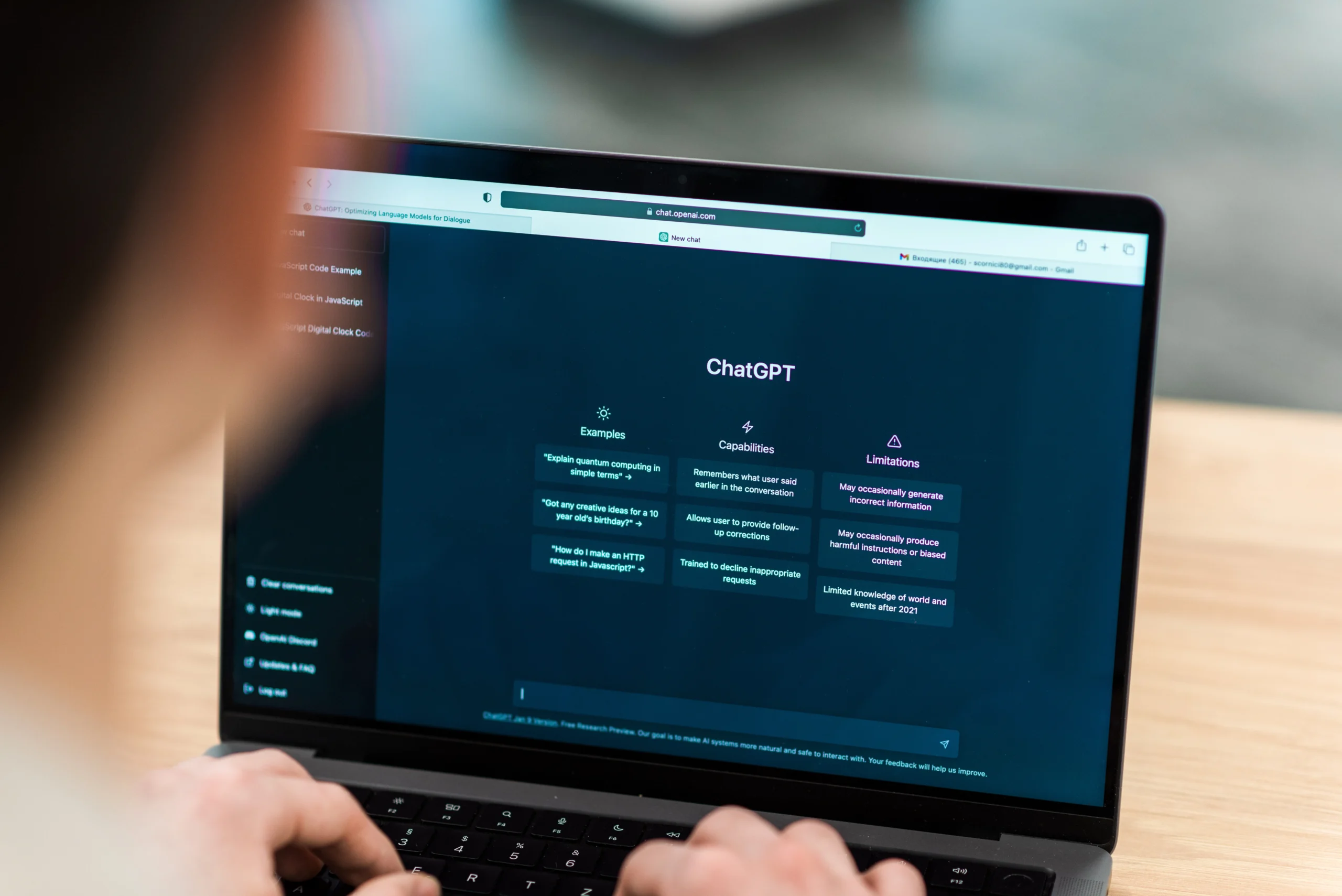
Is ChatGPT Generative AI: Understanding Its Functioning, Capabilities, and Limitations?

Is ChatGPT Generative AI: Understanding Its Functioning, Capabilities, and Limitations?

It’s fair to say that ChatGPT is a conversation that involves the world talking. In a sense, it is a glimpse into the future that is helping us, whether we’re using it to summarize reports, draft emails, or brainstorm creative campaigns. But that brings up a crucial question: Is ChatGPT really Generative AI? Should that be the case, what does it imply for us, as learners, professionals, or even decision makers?

We’ve broken it down clearly in this guide below. This blog will explore what Generative AI is, how ChatGPT fits into it, what it can (and can’t) do, and how these insights help shape your learning and career path.

What Is Generative AI?

Generative AI refers to algorithms that can create new content by learning patterns from existing data. It’s a subset of artificial intelligence focused not just on analyzing or classifying, but generating. That’s the core difference.

Generative AI is different from traditional AI, such as predicting stock prices or suggesting what to watch; it includes writing a poem, composing music, creating marketing copy, creating deepfakes, and even designing a product from scratch.

Is ChatGPT a Generative AI?

Yes, 100%.

One of the most popular Generative AI examples today is ChatGPT, which is built on top of the GPT (Generative Pre-trained Transformer) architecture by OpenAI. It has been trained on huge piles of text data from books, articles, and websites to learn how people communicate.

But it doesn’t just mimic language. It generates new sentences based on input, context, and probability, meaning it creates original responses, not just copied ones.

How Does ChatGPT Actually Work?

Let’s walk through it simply:

Training Stage

To start with, ChatGPT was first trained on a large dataset containing books, articles, websites, and other content so that it could understand the language patterns.

Pretraining with Transformers

The GPT model uses the Transformer architecture to make it focus on attention mechanisms, i.e., to understand the relation between words in a sentence better.

Fine-Tuning with Human Feedback

The developers later used Reinforcement Learning with Human Feedback (RLHF) to make its answers more accurate, useful, and safe.

Real-Time Generation

ChatGPT takes in whatever you type, analyzes your input, predicts the most likely next word (token), and keeps building the response word by word within milliseconds.

It isn’t the purpose of fetching content from the internet or a pre-written database. Everything is coming fresh, on the spot.

Generative AI applications

As learners or professionals, we need to understand what ChatGPT does best. Some of its strongest generative AI applications are:

1. Text Generation

From writing blog posts, emails, reports, and more, ChatGPT is a strong content writer for professionals in the marketing, HR, and management fields.

2. Summarization & Translation

This can take long documents and condense them into little summaries, along with translating text from one language to another in order to reduce the amount of work that goes into research and communication.

3. Brainstorming & Ideation

Do you require ideas for a campaign or product name? Creative prompts from ChatGPT can assist you with dealing with writer’s block and moving your writing quickly.

4. Customer Support Simulation

It allows for simulating chatbot interactions, generating FAQ answers for training support teams, or creating AI-driven customer journeys.

Knowing these features, it is no wonder ChatGPT is one of the most adopted Generative AI apps among industries today.

Limitations of ChatGPT

It is important to note that ChatGPT is a powerful tool, but it’s important to understand its current boundaries. 

Inaccurate or Outdated Data

ChatGPT is not actively accessing up-to-date information, and is only trained on the data up to a certain cutoff, so it cannot go beyond that. This makes responses obsolete, especially in the case of time-sensitive topics. Further, it may produce factually incorrect answers that seem correct.

Lack of Human Emotion and Intent

ChatGPT is good at mirroring tone and providing clues to empathy, but in fact, it doesn’t know what it is talking about, has no emotions, no intention, and no cultural nuance. It has no emotional intelligence, and therefore no ability to generate responses other than by pattern, meaning human oversight is still needed for some of these conversations.

Ethical and Privacy Concerns

There are also concerns of misinformation, plagiarism, bias, and data security with the use of AI-generated content. When using AI for decision making and when publishing, users must then apply ethical judgment. Today, we understand that what is taught as modern AI training in Bangalore is also being taught in global curricula, one of which is the responsibility for usage.

Limited Contextual Understanding

Many times, ChatGPT falls short of doing tasks that require deep contextual awareness, multi-turn reasoning, and so forth. Such prompts might make it unable to understand vague queries or break complex queries down to simple terms that require human input and calibration for correctness.

Why Understanding Generative AI Matters for You

Irrespective of which department you belong to, HR, marketing, operations, or analytics, Generative AI is changing how work is carried out.

  • HR Managers use AI tools to generate job descriptions, onboarding materials, or internal policies.
  • Marketers rely on AI for content creation, segmentation, messaging, and SEO optimization.
  • Business Analysts use AI to simulate customer responses or visualize data narratives.

Now, if you want one of the new career pivots or advancements, then knowing how tools like ChatGPT work is no longer an option but a necessity.

Therefore, at Welingkar Institute of Management Development and Research, we apply real-world AI use cases within business education programs so that students can explore tech-integrated roles.

How to Learn More About Generative AI

Here’s how you can start:

Explore Generative AI Examples

Use tools such as ChatGPT, Midjourney, Claude.ai, and Gemini to try to see how text, image, and video generation works.

Start with Use Cases in Your Field

For a marketer, there is also the option of using AI to write a campaign plan. Suppose you work in HR, and then simulate the training script. Learn by doing.

Enroll in AI-Focused Business Courses

Practical, outcome-oriented learning is key. Welingkar Bangalore offers AI training in Bangalore, which is precisely about this hands-on exposure to AI, Ethical use, and AI fluency for business professionals.

Stay Updated on Ethics and Policy

Understand copyright, safe use, and what is going on with AI regulations around the globe.

Conclusion

So, is ChatGPT Generative AI? Absolutely. That being said, professionals in this AI-driven era understand what that means and what it doesn’t.

As a career-minded person seeking a career in business, marketing, HR, or analytics, your value goes beyond the use of these tools: Your value is in knowing how they work, where they excel, and where human judgment still matters most.
Explore AI training in Bangalore with WeSchool and take the next step toward mastering generative AI.

Also Read, Career Spotlight: AI Research Scientist

Top ChatGPT Alternatives to Boost Productivity

Top ChatGPT Alternatives to Boost Productivity

It’s true that most of us have used ChatGPT and noticed how quickly it gives answers. It helps us generate writing, makes things easier to understand, summarizes information, comes up with creative ideas, and supports our thinking. As more people in the workplace and education use AI tools to enhance what they do, the question of whether there are better alternatives naturally comes up. Are there any strong ChatGPT productivity tools that work better or in a new way? Absolutely.

We’ll look at the ChatGPT best alternative tools together in this blog. No matter if you’re focused on marketing, trying to improve HR tasks, or handling reports and strategy in management, you’ll discover a lot of AI tools that can help. There are also a number of tools that ChatGPT doesn’t have.

Why Consider Top Alternatives to ChatGPT?

ChatGPT is very good at Natural language generation, but a number of alternatives are far better than it. These best ChatGPT alternatives may include the following:

  • Real-time access to live web data.
  • Better content structuring
  • Enhanced integrations with daily-use tools
  • Specialized applications in marketing, research, or planning.
  • Variations of output tones, formats, and safety mechanisms

The concept is not to replace ChatGPT but to create a diversified toolkit that goes with your workflow.

9 ChatGPT Best Alternatives

Find AI tools that complement and boost ChatGPT with special features that are specifically designed for writing, research, planning, and business productivity.

1. Gemini – The Real-Time AI Assistant from Google

Why It Stands Out: Gemini (formerly Bard) is one of the simplest AI tools for real-time data. It takes information from the web to give current answers and views, hence suited for dynamic industries where information becomes outdated quite fast.

Use it for: Keyword, trend analysis, content research, and backed-by-data strategy planning.

Best For: Digital marketers, researchers, SEO teams, and business strategists.

2. Microsoft Copilot – Productivity Inside Office Tools

Why It Stands Out: Built into Microsoft 365, Copilot changes the way Word, Excel, PowerPoint, and Teams are used.

Use it for: Report writing, meeting minutes and agendas, slide makeover, or spreadsheet data interpretation.

Best For: HR teams, managers, analysts, and people who deal with Office documents on a daily basis.

3. Jasper – For Scalable Marketing Content

Why It Stands Out: Jasper is a purpose-built content marketer’s tool. Its AI is trained on high-performing marketing frameworks and generates brand-aligned content in different formats and tones.

Use it for: Blog articles, advertisement copy, email sequence, and product descriptions.

Best For: Content teams, marketing leads, agencies, and freelancers.

4. Claude by Anthropic – The Ethical Conversationalist

Why It Stands Out: Claude puts emphasis on AI use being safe and aligned. It provides balanced, context-aware responses, which are best suited for delicate topics.

Use it for: Writing internal HR memos, DEI training materials, and communicating with leadership.

Best For: HR personnel, leadership teams, CSR department, and ethics councils.

5. Notion AI – AI Meets Project Planning

Why It Stands Out: Notion AI integrates writing help with planning in a single interface. In notes, it makes outlines, finishes thoughts, and summarizes long content.

Use it for planning a project, making meeting notes, managing knowledge, and implementing SOPs.

Best For: Operations, project managers, product teams, business consultants.

6. Writesonic – Affordable, Fast, and Versatile

Why It Stands Out: Writesonic has more than 80 templates that can facilitate the production of different types of content on a large scale. It is lightweight, and it is ideal for users who require quick turnaround.

Use it for: Social media captions, landing pages, newsletters, and meta-descriptions.

Best For: New businesses, solopreneurs, small business owners, and entry-level marketers.

7. Perplexity AI –Answers With Sources

Why It Stands Out: Perplexity not only answers questions, but it also gives citations. This is what makes it very convenient for academic, legal, or research needs.

Use it for: Market research, abstract summaries, and fact-driven content creation.

Best For: Business students, researchers, analysts, and content editors.

8. Chatsonic – AI With Web + Image Capabilities

Why It Stands Out: Chatsonic works on top of GPT options but includes live web navigation, voice, and image commands all rolled into one platform.

Use it for: visual planning campaigns, news summaries, and live brand content.

Best For: Social media managers, brand strategists, and creative professionals.

9. GitHub Copilot – AI-Powered Coding Companion

Why It Stands Out: For people who are developing digital products or AI applications, GitHub Copilot is the best tool for automating suggestions, debugging, and learning new coding.

Use it for: Design chatbots, automate tasks, and play around with AI applications.

Best For: Developers, data scientists, product engineers, software teams.

Learning Note: At Welingkar Institute of Management Development and Research, students of our industry-oriented AI training in Bangalore get an early exposure to tools. This face-to-face training equips the learners to lead in marketing, communication, and digital transformation roles where AI is no longer optional but necessary.

Why AI Fluency Matters in Business Careers

AI skills are not just about automation but more about smarter decision-making, increased output, and sharper insights.

Knowing how to incorporate the leaders of the alternatives to ChatGPT into everyday workflows will train future professionals to:

  • Lead digital transformation initiatives
  • Optimize team communication and processes
  • Improve the customer experience via smart content.
  • Spew out swiffer, better, and lower-cost outputs.

For this very reason, there has been a change in the focus of contemporary management education. Institutions such as Welingkar Bangalore are making sure that students don’t only know which tools to use but how and why to use them in real situations.

Conclusion

There is a tendency to grow when using top alternatives to ChatGPT, while being restrained to a single platform limits growth. By creating a multi-tool approach that is flexible and uses the best ChatGPT alternatives, professionals can write smarter, plan faster, and work smarter.

For those who are gearing to lead in marketing, analytics, HR, or management, mastering these tools is better than an edge. It’s a necessity.

Welingkar Institute of Management Development and Research will take a step further and supercharge your productivity with AI training in Bangalore.

FAQs

What is the reason for looking for alternatives to ChatGPT?

Although ChatGPT is powerful, there are alternatives like Jasper, Bard, and Claude that have unique features which include real-time browsing, content personalization, ethical filters, or better integration with work tools. They are more efficient for certain use cases.

What are some ChatGPT productivity tools for marketers?

Such tools as Jasper and Writesonic are excellent for marketers. They provide templates for ads, blogs, and emails, and can automate massive amounts of content while still keeping the brand voice.

Can students use other ChatGPT alternatives for academic and project work?

Yes! Students can use tools such as Perplexity (with citations), Notion AI for notes and planning, and Bard for real-time research – they are all great additions to the old learning methods.

Importance of Marketing Analysis

Importance of Marketing Analysis 2025

Marketing today is not all about creativity or guesswork; it’s about data. Every campaign, every click, and every customer decision contains valuable information. The real struggle is to know how to read that data and do something with it.

It is where marketing analysis comes in. It is the gap between the marketing activities and the measurable business outcomes. With organized insights, we know what is working, what is not working, and what needs to be changed. 

Let’s check why marketing analysis is important for modern business and how it goes directly to some of the key abilities for marketing success.

What Is Marketing Analysis?

Marketing analysis is the gathering, measurement, and analysis of information with regard to marketing initiatives. It helps analyse the patterns in consumer behavior, predict the demand, calculate ROI, and optimize the strategy.

Unlike the traditional marketing practices that can be based on assumptions or superficial insights, marketing analysis goes deeper with the help of quantitative methods. It’s not about the numbers, it’s about making the numbers work.

Why Is Marketing Analysis Important?

Marketing today moves fast. Platforms change, expectations of customers change, and competition is relentless. Without analysis, strategies are conducted on assumptions. Decisions informed, targeted, and impactful.

Let’s explore why it’s essential:

1. Enhances Decision-Making

Analysis helps answer questions like: Which channel performs best? Who is converting? What message is working? These insights make decisions based on facts.

2. Improves ROI

Once marketers can clearly see what works, they will be able to spend money well. Rather than spreading spend thin, they double down on high-performing strategies.

3. Boosts Customer Understanding

Analytics dissects what the customers want, when they want, and how they react, and opens doors for more personalization and better engagement.

4. Supports Agile Campaigns

Real-time data allows teams to course correct as they fly, cut out waste, and create more efficiency.

5. Tracks Long-Term Trends

Beyond instant wins, analytics identifies trends with time – insights to brand growth, product relevance, or shifting population’s interests.

Types of Marketing Analysis

There are various methods of carrying out marketing analysis, each providing its unique perspective of performance. Some of the most popular are:

  • Descriptive Analysis: Looks at what is going to happen. For instance, how high or low was the bounce rate or the number of people who opened a campaign?
  • Predictive Analysis: Predicts future outcomes on the basis of past trends. It helps answer: What’s likely to happen next?
  • Prescriptive Analysis: Recommends actions to take. It employs models to direct the marketers towards better outcomes.
  • Customer Segmentation: Segments the audience based on behavior, demographics, or buying patterns.
  • Market Basket Analysis: Helps to recognize which products are sold frequently together and directs upselling or cross-selling tactics.

Taken together, these approaches develop a holistic picture of the marketing impact.

How Is Marketing Analysis Used?

Marketing analysis is an important part of any business activity. Here’s how it’s applied:

  • Campaign Optimization: Measure engagement, test A/B versions, tweak the creative – all in real time to optimize performance.
  • Customer Journey Mapping: Know where users drop off, where conversions come from, and what content leads to action.
  • Content Strategy: Find out the best blog subjects, the keywords bringing the traffic, and the tone working on social networks.
  • Pricing and Promotion: Compare the effect of discounts on conversion, or which pricing strategies will drive repeat purchases.
  • Competitor Benchmarking: Monitor how the brand is performing in terms of visibility, engagement, and share of voice.

AI and automation are rapidly driving these use cases, particularly when teams demand quicker, smarter, and more scalable decision-making processes.

Skills Required for Marketing Analytics

Marketing analysis does not revolve around the tools, but also around how well we use them. Competency building calls for a combination of technical and strategic skills.

The following are essential skills to marketing analytics success:

  • Data Interpretation: Knowing what metrics are and how they affect strategy.
  • Statistical Knowledge: Using logic, averages, correlation, and predictive models.
  • Marketing Fundamentals: Having the why for each of the tactics – brand, funnel stages, and user behavior.
  • Tool Proficiency: Familiarity with such platforms as Google Analytics, Power BI, Tableau, and CRM dashboards.
  • Business Communication: Clearly communicating the findings so as to facilitate stakeholders and decision-makers.

These are the same competencies studied in the advanced curriculum at the Welingkar Institute of Management Development and Research, where the students work with real data campaigns while undergoing AI training in Bangalore. This helps them acquire practical skills that employers are looking for.

What Tools Do Marketing Analysts Use?

Professionals involved in the marketing analysis often use a combination of traditional and AI-based tools, such as:

  • Google Analytics – Takes care of website and campaign performance
  • HubSpot / Salesforce – Data about customers’ relationships
  • Tableau / Power BI – Visual dashboards and reporting
  • SEMrush / Ahrefs – SEO and content performance.
  • Excel / Google Sheets – Data modeling and calculations
  • ChatGPT, Jasper, and Notion AI – AI tools to help in campaign ideation and reporting

It is crucial to learn how to use these instruments, and that is why practical training, which Welingkar Bangalore provides, is so important for would-be marketing professionals.

How to Learn Marketing Analysis

Below are the ways in which learners and early-career professionals can acquire skills in marketing analysis:

1. Take Introductory Courses

Learn key ideas such as marketing funnels, KPIs, and campaign stats.

2. Practice with Tools

Try out trial versions of analytics platforms and study case studies.

3. Work with Real Data

Create dashboards from the actual campaign data and insights from reports.

4. Get Certified

Professional training from Welingkar Institute of Management Development and Research provides structured learning paths. With its AI training in Bangalore, students experience marketing analysis, AI modeling, and decision-making frameworks in real time.

5. Apply Learning in Projects

Test strategies on live or mock campaigns, and report findings with actionable plans.

Conclusion

When every click tells a story, the marketing analysis becomes the tool that will try to make sense of the noise. It helps teams to act with clarity, creativity, and precision, filling the gap between data and strategy.

And for students and practitioners who want to build tomorrow’s brands, the time to develop this expertise is today. If one does possess the right skills, tools, and attitude, marketing analysis is more than a function – it’s also a career advantage.

Build data-driven marketing skills with AI training at Welingkar Institute of Management Development and Research.

FAQs

What is the purpose of marketing analysis?

Marketing analysis enables businesses to evaluate performance, comprehend customers, optimize ROI, and generate data-centric decisions through campaigns and strategies.

What are the best tools for marketing analysis?

Some of the popular tools are Google Analytics, Tableau, HubSpot, SEMrush, and AI-based assistants such as Jasper and ChatGPT.

Do marketers need to have analytics skills?

Yes. Modern marketers must have a deep knowledge of data, be capable of reading their performance metrics, and adjust to customers’ behavior. Analytics is a vital part of contemporary marketing positions.

Previous Next
Close
Test Caption
Test Description goes like this