
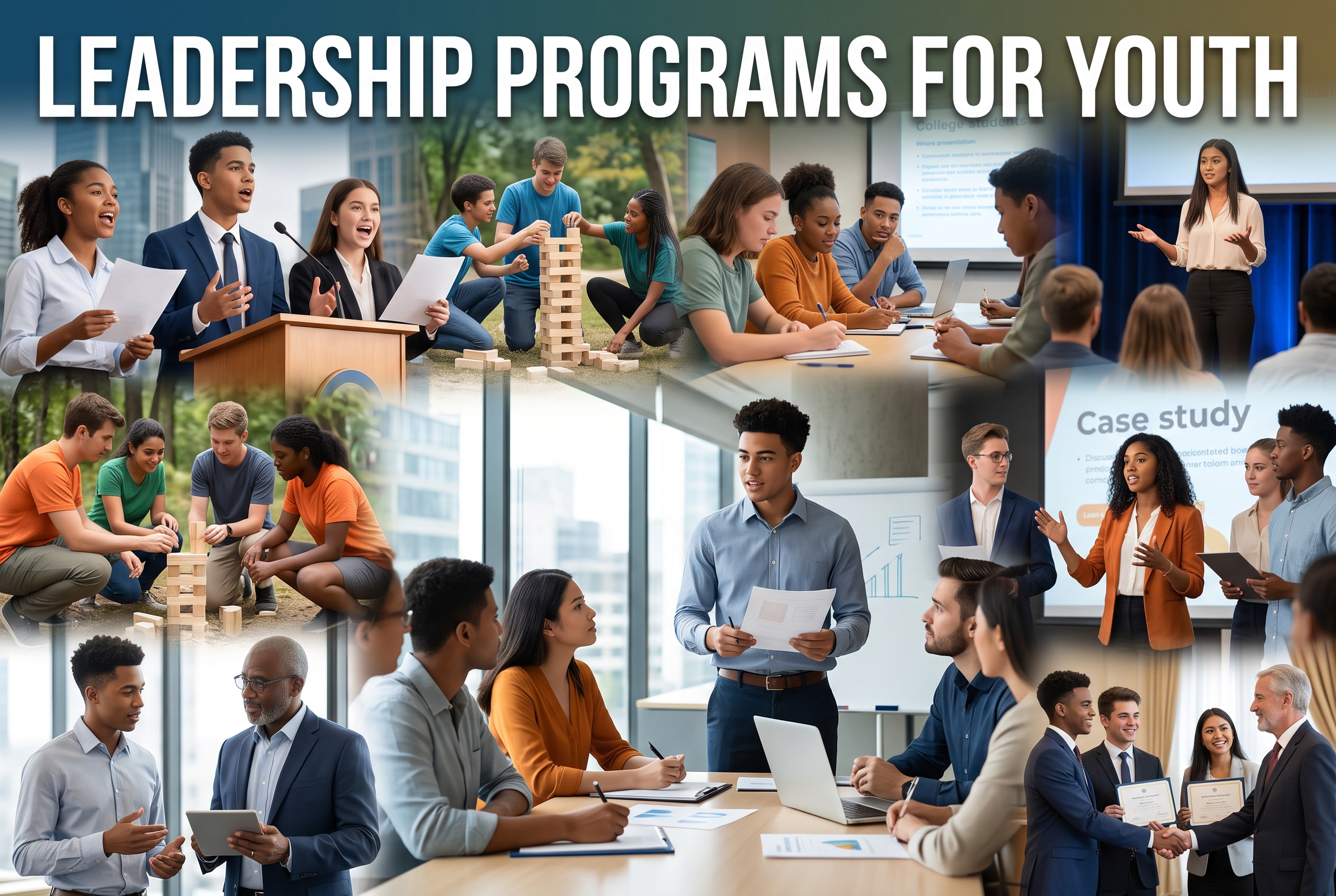
The best time to build leadership skills is early, not at 42. Here is how young professionals can pick a leadership programme that builds real skills, not just a certificate.
If you want to lead, do not wait for a title to start training. The professionals who build leadership skills in their twenties and early thirties, before they manage anyone, tend to outrun those who learn on the job through trial and error.
That is the whole argument of this piece, and everything below is about how to act on it without wasting money on the wrong programme.
Start Leadership Training Before You Manage Anyone, Not After
Most people get formal leadership training roughly a decade too late. According to a Harvard Business Review analysis by Jack Zenger, the average age of a person receiving their first formal leadership training is 42, while people typically become supervisors around age 30.
That is about 12 years of leading teams with no structured training, which is enough time to lock in bad habits. In my experience advising early-career professionals, the ones who start deliberately in their late twenties simply have more reps by the time a real management role arrives.
Employers have noticed the same thing. In the LinkedIn Workplace Learning Report 2024, leadership development programmes were the single most common career-development offering, run by 70% of organisations with mature career programmes.
What Counts As a Leadership Programme for Young Professionals
A leadership programme for young professionals is a structured course, usually a few weeks to a few months long, that teaches you to influence, decide, and manage people before you hold a senior title. It sits between a one-off workshop and a full degree.
It is not an MBA, and it is not a motivational seminar. The useful ones focus on applied skills: strategic thinking, decision-making under uncertainty, giving feedback, resolving conflict, and leading a team you do not formally control.
Demand for exactly this is high among younger workers. Udemy research reported by BusinessWire in 2024 found that 65% of Gen Z said professional development was their strongest workplace motivator, more than any other generation surveyed.
The Five Things I Check Before Recommending Any Leadership Programme
Use this as a checklist. If a programme fails three or more of these, keep looking.
- Practice, not just lectures: Look for live projects, simulations, or case work you actually present, not slides you passively watch.
- Feedback from someone senior: A programme is worth far more if a mentor, senior faculty member, or practising leader critiques your work directly.
- A cohort worth the fee: The people beside you become your network for the next 20 years, so weigh who else enrols.
- A format that fits a job: Weekend or online delivery matters when you cannot take a career break, so check the schedule before the syllabus.
- A credential that signals something: Ask whether a specific type of employer recognises the certificate, or whether it is just a badge.
How WeSchool’s Leadership Programme Fits Early-Career Professionals
WeSchool’s Leadership Program runs for 4 months across 48 hours of live online sessions, uses Harvard Business Review case studies, and includes CXO Connect sessions and live project presentations, ending in a Welingkar certificate. See the programme page for current fees.
Read against the five checks above, it scores well on practice (live projects), senior feedback (CXO and faculty interaction), and format (online, built around working schedules). Those are the three that early-career professionals most often skip and later regret.
One honest caveat: WeSchool positions the programme for “mid-career professionals, functional heads, and aspiring CXOs,” so a fresh graduate in their first year may find parts of it pitched slightly ahead of them. If you have two to six years of experience and are moving toward your first management role, that is the sweet spot.
A Quick Comparison: Self-Study, Workshops, and Structured Programmes
Different formats solve different problems, and cost tracks closely with feedback.
| Option | Time and cost | Best for | Main limitation |
| Self-study (books, online courses) | Low cost, self-paced | Building awareness and vocabulary | No feedback or accountability, easy to quit |
| One-off workshop | 1 to 2 days, low to mid cost | Fixing one specific skill | Little follow-through, fades fast |
| Structured programme with mentoring | Weeks to months, higher cost | Applying skills to real work with feedback | Needs a real time and money commitment |
If your goal is a genuine step up in responsibility, the structured route is usually the only one that changes behaviour, because it is the only one that forces you to practise in front of people who will tell you the truth.
What a Leadership Programme Will Not Do for You
A programme is a multiplier, not a shortcut, and it is worth being clear about the limits. No course can hand you a promotion, and the certificate alone rarely moves a hiring decision on its own.
The evidence backs restraint here too. The training-timing gap documented by Harvard Business Review shows that late training correlates with weaker habits, but no study proves a single course guarantees a leadership role, so treat any such promise with suspicion.
What a good programme reliably does is compress the trial-and-error years: it gives you frameworks, feedback, and a network sooner than the job would. The application, the follow-through, and the risk-taking are still on you.
The Bottom Line
If you are early in your career and serious about leading, start structured training now rather than waiting for the title, and choose a programme on the five checks above: real practice, senior feedback, a strong cohort, a workable format, and a credential someone values. For professionals with a few years of experience moving toward management, WeSchool’s Leadership Program covers the first four of those directly.
Related reading on this site:
- WeSchool Leadership Program (the full programme, curriculum, and fees)
- Negotiation Skills Program (a core leadership skill, taught as a short course)
- Design Thinking and Innovation (problem-solving skills that pair well with leadership)